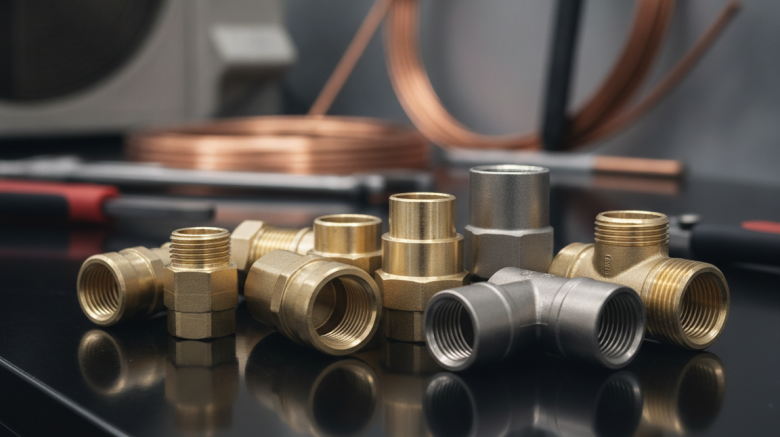
Female compression fittings give installers a clean and efficient approach for connecting pipes and tubing. They eliminate the need for solder or welded joints. This article explores the function of female compression fittings, highlighting how the compression nut and ferrule produce a tight seal. It also explains their importance in both plumbing and HVAC applications.
3/8 Compression Coupling
Selecting high-quality pipe fittings can substantially lower energy losses. That helps prevent refrigerant or water leaks, which can harm the environment. HVAC systems, which include components like compressors, condensers, expansion valves, and evaporators, rely on robust connections. Choosing the appropriate female compression fitting and compatible materials—such as brass, copper, stainless steel, PVC, or PEX—is important for long-term system performance.
In many plumbing systems, PEX or PVC with compression fittings are commonly selected for their ease of service and low heat exposure. For different demands, refrigeration lines require fittings that can resist thermal fatigue and preserve a seal across a wide temperature range. InstallationPartsSupply.com and its product lines help meet these needs, offering common sizes and parts such as ferrules and compression nuts.
Key Takeaways
- Female compression fittings uses a nut-and-ferrule system to seal without soldering.
- Matching the fitting material correctly—brass, copper, stainless, PVC, or PEX—limits corrosion and failure.
- Proper fittings reduce energy loss and help stop refrigerant or water leaks in HVAC and plumbing systems.
- Fitting guide materials and suppliers like InstallationPartsSupply.com streamline part selection.
- Check ferrules and tighten per manufacturer torque to ensure a long-lasting seal.
How Compression Fittings Work In HVAC And Plumbing Applications
Compression fittings fasten pipes and tubing without solder or welding. They are ideal for copper, PEX, PVC, and stainless lines where heat or flame is not preferred. Many professionals source parts from Installation Parts Supply to support consistent quality and fit.
What A Compression Fitting Is And How It Works
A compression fitting uses a nut and a ferrule olive pressed against the pipe by the fitting body. The tightening action compresses the brass ferrule or sleeve, which locks onto the outer pipe and forms a seal. This mechanical action demonstrates the common question of what is a compression fitting by showing how mechanical compression creates a leak-tight joint.
HVAC Vs Plumbing Fittings: Key Differences
HVAC fittings must handle refrigerants, wider temperature swings, and thermal fatigue. Plumbing fittings focus on potable water, wastewater, and pressure from building systems. When comparing HVAC vs plumbing fittings, selection depends on media, service temperature, and pressure ratings.
HVAC systems like split systems, VRF, and rooftop units often use copper fittings and brazed joints for refrigerant lines. Plumbing applications often favor PEX compression and PVC for drains, where solvent welds or crimp systems are common.
Brass, Copper, Stainless Steel, PVC, And PEX Materials
Copper fittings offer excellent thermal conductivity and corrosion resistance. Brass parts such as ferrules offer resistance to wear and are common in many compression fittings. Stainless steel is suitable for corrosive or high-pressure environments.
PEX compression is popular for domestic water lines because it handles freeze-thaw cycles and is flexible. PVC continues to be a low-cost option for drains and certain chilled-water circuits when pressure is low.
| Component Material | Common Use | Advantages | Limitations |
|---|---|---|---|
| Copper | Cooling lines and drinking-water systems | Strong conductivity with durable performance | Costlier with some risk of physical damage |
| Brass | Ferrules, nuts, and compression fittings | Machinable and resistant to corrosion | Galvanic corrosion risk if poorly matched |
| Stainless Steel | Demanding corrosive applications | Strong, durable, and resistant to corrosion | More expensive and harder to machine |
| PEX Tubing | Residential hot/cold water | Freeze-resistant with flexible handling | Needs compatible PEX compression hardware |
| PVC Components | Drain, low-pressure chilled water | Economical with straightforward installation | Limited in hot or pressurized applications |
Why Choosing The Right Fitting Matters For Efficiency And Leaks
Selecting the proper fitting lowers leak risk and maintains system pressure. In refrigeration circuits, a poor joint can release refrigerant and lower efficiency. Proper seals and compatible materials cut maintenance and lower energy waste.
Matching the right ferrule type and matching copper fittings or PEX compression hardware reduces the chance of galvanic corrosion and thermal fatigue. That approach extends service life and keeps HVAC and plumbing systems running efficiently.
Female Compression Fitting Basics
A female compression fitting seals a pipe or tube end when a nut compresses the ferrule olive against the fitting body. This design enables tight connections without soldering, making it common in plumbing and HVAC. Related unions and adapters make possible quick disassembly for service or instrument changes.
Common Configurations And Definition
A usual compression assembly includes a female compression nut, a ferrule olive, and the fitting body. The nut screws onto the fitting body and compresses the ferrule to grip the tube. Many systems use unions, straight fittings, or elbow bodies to adapt direction and access during maintenance.
Materials And Compatibility
Brass and copper are typical choices for refrigerant fittings and hot-water lines due to their ability to tolerate thermal cycles and resist deformation. Stainless steel is chosen for high-pressure or corrosive environments. PVC and PEX commonly serve condensate and domestic water runs, but they require proper inserts or specific ferrules for secure joints.
Plumbing, HVAC, And Instrumentation Uses
In plumbing, female compression fittings link stops, valves, and supply lines without solder. In refrigeration and HVAC work, technicians use them on refrigerant fittings between compressor, condenser, and evaporator where service access is critical. Gas lines and instrumentation often use compression parts for leak-tight, serviceable connections.
Female Vs Male Compression Fittings And Adapters
Female compression fittings receive a male end and form the receiving thread, while a 3 8 Male Compression Fitting provides that mating male component for tubing or ports. A 3/8 Valve Adapter helps technicians interface service valves and gauges to the system. Using correctly matched materials limits galvanic corrosion and keeps joints reliable under pressure and thermal change.
| Assembly Part | Common Material | Usual Application | Service Note |
|---|---|---|---|
| Female Compression Nut | Brass | Plumbing feeds and shutoff connections | Replace if rounded or cracked |
| Sealing ferrule | Brass or stainless | Forms a seal on copper, brass, and some PEX | Often not reusable after compression |
| Body of fitting | Brass or stainless steel | Cooling systems and instrument lines | Check pressure rating and media compatibility |
| Small male compression fitting | Copper and brass | Mating for female ports, small-diameter lines | Check thread and seat compatibility |
| 3/8 service valve adapter | Brass | Service-gauge interfaces and manifold hoses | Confirm sealing components before use |
| Installation Parts Supply product line | Various | Supplier for matched fitting components | Choose compatible ferrules and nuts for longer service life |
Plumbing And HVAC Fitting Types, Sizes, And Related Adapters
This section delves into the various fitting types, sizes, and adapters essential for plumbing and HVAC projects. Technicians rely on couplings, elbows, unions, and adapters to manage line routing, component isolation, and service access. The right combination of parts significantly impacts system performance, including pressure rating, temperature limits, and reliability.
Compression couplings plus compression unions help create the creation of removable joints for maintenance and testing. Straight couplings are useful for straight connections, while compression unions are better suited for components that need to be disconnected without disrupting the line. For short runs, a 3/8 Compression Coupling is often used in instrumentation and refrigeration applications.
Adapters and elbows make it easier to handle tubing routing around obstacles and for connecting different types of fittings. A 3 8 Male Compression Fitting is used to connect to a female port or adapter, facilitating the integration of service valves and gauges. Installation Parts Supply catalogs provide a wide range of these components, helping provide quick access on job sites.
Selecting the correct size is essential, depending on the tube’s outside diameter and the ferrule and nut set. Check that the female compression fitting size matches the tube OD to prevent leaks. On 3/8″ tubing, verify ferrule compatibility and torque specifications. Also check the system’s maximum pressure and temperature ratings before making a final selection.
The Max Adaptor and 3/8 Valve Adapter are useful for connecting gauges, service ports, and small refrigerant lines. These parts help simplify the process of charging and diagnostics in HVAC systems. During HVAC diagnostics, a 3/8 Valve Adapter is commonly used to link manifold hoses to service valves on compact systems.
Material choice balances between durability and corrosion resistance. Stainless steel offers durability and corrosion resistance, making it suitable for harsh environments. Copper and brass suit refrigerant circuits and heat transfer lines due to their balance of machinability and corrosion protection. PVC and PEX can be used in low-pressure condensate and water lines but not for high-pressure refrigerant service.
Fitting sustainability is affected by leak prevention and recyclability. Well-sealed metal fittings can lower refrigerant emissions and can be recycled at the end of their life. Buying quality parts from reputable suppliers reduces failures and minimizes long-term environmental risk.
Below is a comparison to help choose between common options by application, pressure, temperature, and reusability.
| Type Of Fitting | Usual Application | Typical Max Pressure | Temperature Range | Service Reuse |
|---|---|---|---|---|
| Brass coupling | Instrument lines, small water lines, and refrigeration uses | As high as 3,000 psi when specified | -65°F to 250°F | Limited, because ferrules are often replaced |
| Brass or stainless compression union | Removable service connections | Up to 2,500 psi | -65°F to 300°F | Good reuse potential for service access |
| 3/8 Compression Coupling | Small plumbing, refrigeration, and instrumentation use | Pressure rating must be verified | Review material specs before HVAC service | Some reuse possible, but service replacement is common |
| 3/8 male compression fitting | Adapter for gauges and service valves | Refrigerant-rated when made and specified correctly | Suitable for typical HVAC cycles | Can be reused if threads and seat remain sound |
| Brass/stainless Max Adaptor | Gauge and valve interface coupling | Designed for higher service-tool demands | Designed around HVAC service cycles | High reuse because it is service-focused |
| Plastic water fittings | Condensate drains and low-pressure water service | Low; not for refrigerant | Commonly around 32°F to 140°F | Limited reuse depending on system and UV exposure |
When ordering, check Installation Parts Supply or other reputable distributors for part numbers, material options, and pressure ratings. Make sure the chosen 3/8 Valve Adapter or Max Adaptor matches both the tubing OD and the service fitting type to avoid mismatches on site.
How To Install And Maintain Compression Fittings
Correct compression fitting installation begins with clean, square pipe ends and the right parts. On HVAC refrigerant circuits, use copper and brass. For condensate or chilled water, PVC or PEX is best. Always check manufacturer specs and ASME B31.5 to minimize energy loss and leaks.
How compression fittings are installed
1. First, cut and deburr the tube to a square face. 2. After that, slide the nut and ferrule onto the pipe in that order. 3. When using soft plastic tubing, insert pipe inserts to keep the tube round before assembly. 4. Hand-tighten the nut, then use the two-wrench technique to finish the joint.
Useful installation tools and methods
Use a two-wrench method to hold the fitting body and turn the nut to prevent tube twist. Follow tightening guidance from the fitting maker or Installation Parts Supply when available. Many installers snug by hand, then add a limited number of wrench turns.
Where pipe inserts should be used
Pipe inserts are important for soft plastic tubing like PEX or thin-wall PVC to prevent ovalization and ensure a leak-free seal. Do not install inserts in solid copper or thick-walled metal tubing, where inserts can interfere with proper ferrule compression.
Common errors and ferrule removal
Do not under-tighten or over-tighten. Under-tightening may allow leaks; over-tightening deforms the ferrule and can make ferrule removal difficult. Most ferrules should be treated as single-use parts; plan to replace them when disassembling a joint.
Safe ferrule removal steps
Shut off the supply and relieve pressure first. Hold the fitting body with one wrench while loosening the nut with a second. Remove the compression nut and pull out the ferrule. When the ferrule is seized, apply penetrating oil, use a ferrule puller, or carefully cut the ferrule off without nicking the pipe.
3/8 Valve Adapter installation guidance
For compact 3/8″ service connections, prepare the tubing the same way and follow the two-wrench technique. The 3/8 Valve Adapter process mirror larger fittings but require careful attention to torque guidance to avoid crushing the tube or the adapter threads.
Inspection and maintenance
Once the system is pressurized, inspect joints for weeps and tighten slightly if needed. Include regular checks for corrosion and thermal fatigue, specially on refrigerant circuits. Avoid placing compression joints where vibration will loosen them over time.
| Stage | Required Action | Best-Practice Tip |
|---|---|---|
| Preparation | Prepare a clean, square, deburred pipe end | Use a quality tubing cutter and deburring tool |
| Assembly | Place nut and ferrule in order before fitting assembly | Install pipe inserts in soft plastic tubing |
| Tighten | Hand-tighten, then use two wrenches | Use the maker’s torque recommendation |
| Pressure Test | Pressurize the system and look for weeps | Check for small leaks and tighten slightly when appropriate |
| Service | Inspect often and replace ferrules during disassembly | Keep spares from Installation Parts Supply for quick repairs |
Conclusion
Choosing the right compression fitting is critical for plumbing and HVAC work. The fitting material, whether brass, copper, stainless steel, PVC, or PEX, must match the service type. This helps provide reliability and extends system life. Proper parts and installation can significantly reduce energy losses and refrigerant leaks, preserving performance and environmental health.
Compression fittings offer a leak-free, solder-free solution. They include a nut, ferrule, and body. To ensure a tight seal, follow these steps: square-cut and deburr the tubing, use the two-wrench technique, and replace ferrules when reused. These methods guarantee long-lasting, leak-tight connections in various applications, from copper piping to instrumentation.
For job-specific needs, such as 3/8″ lines, 3/8 Compression Coupling, or 3/8 valve adapters, make sure you match size and pressure ratings to the task. Trusted-supplier parts are essential. An Installation Parts Supply guide can assist in finding compatible fittings and adapters. Regular inspections and proper selection maintain system efficiency and compliance.
In closing, dedicating time to material selection and correct assembly is essential. That helps create durable, leak-free connections. It contributes to optimal performance, fewer repairs, and less environmental harm.
Related: Top 3 Most Best Places to Purchase Backlinks for SEO